Description
100×70 cm
oil on canvas
Gustav Klimt (1862-1918) was an Austrian painter and one of the best-known representatives of the Art Nouveau style.
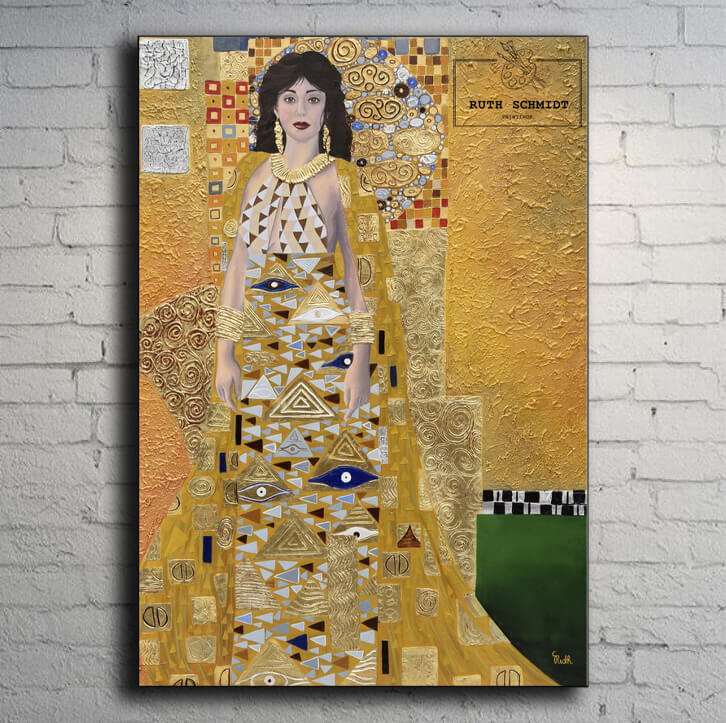
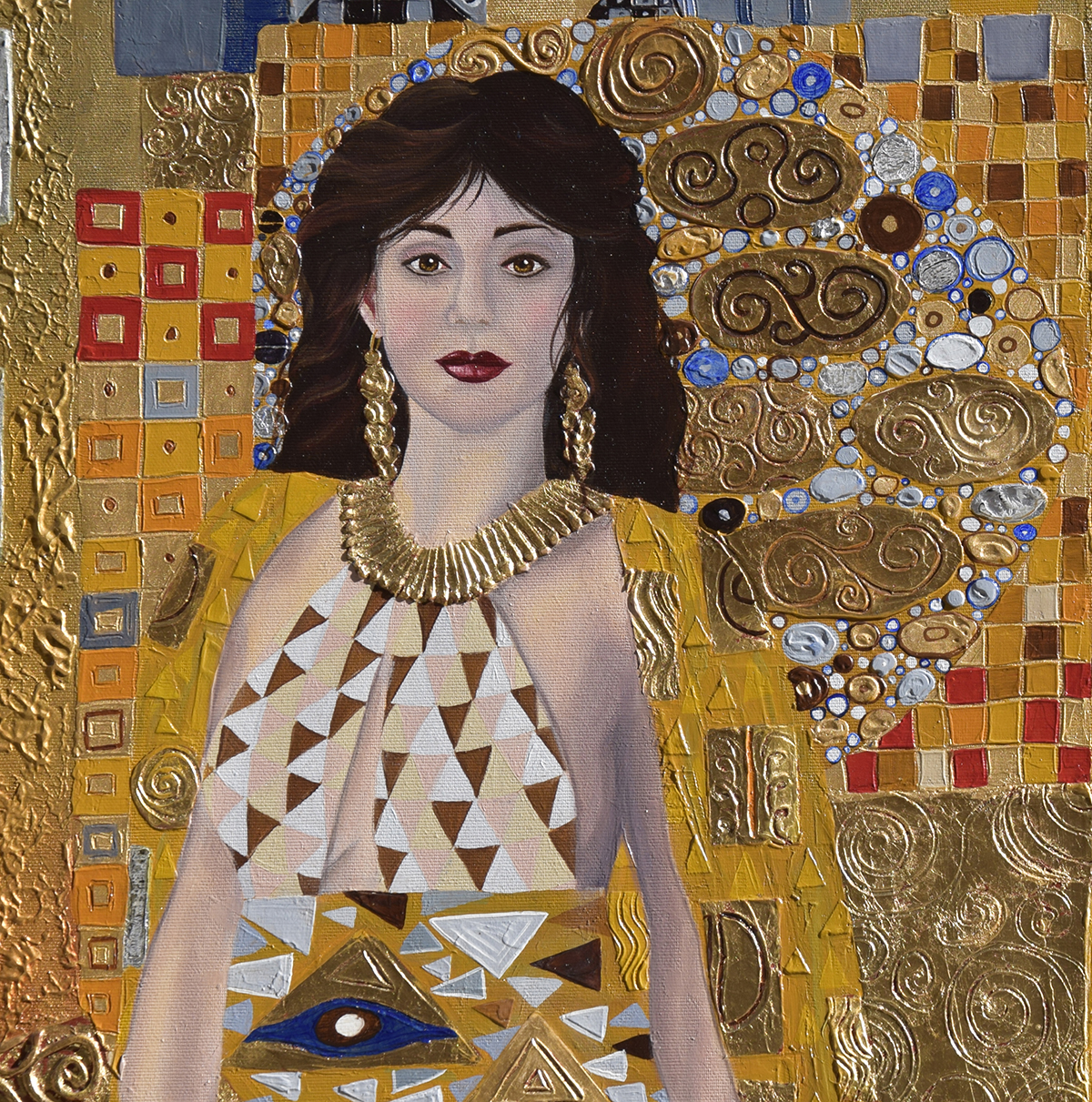
In the portraits, the figures are almost pressed into the golden background. Instead of defining a spatial location, the portraits incorporate the figures into the picture plane in a coat-of-arms-like composition: various ornamental surfaces effectively banish the depicted subjects into the background of the picture, from which the face and hands emerge naturalistically.
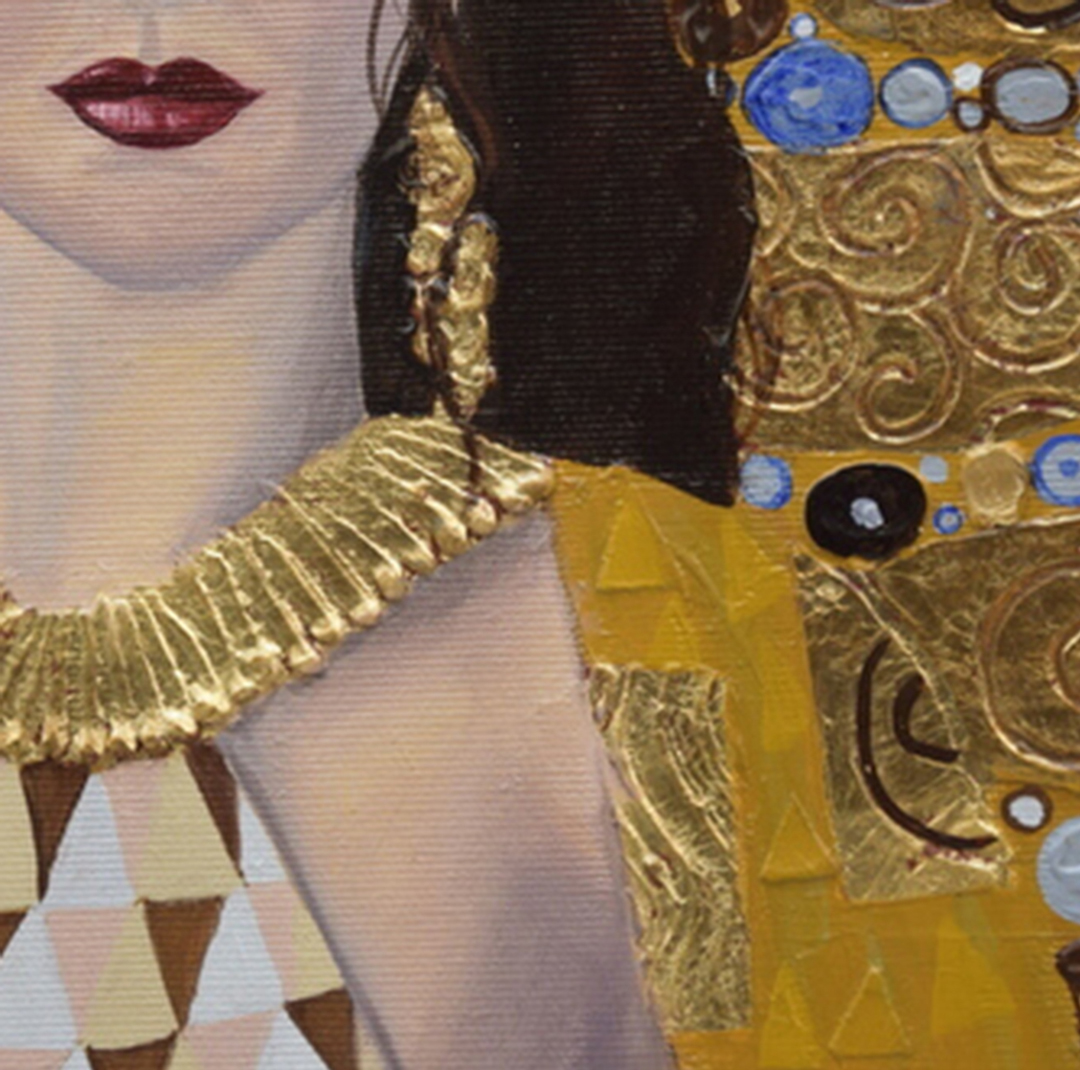
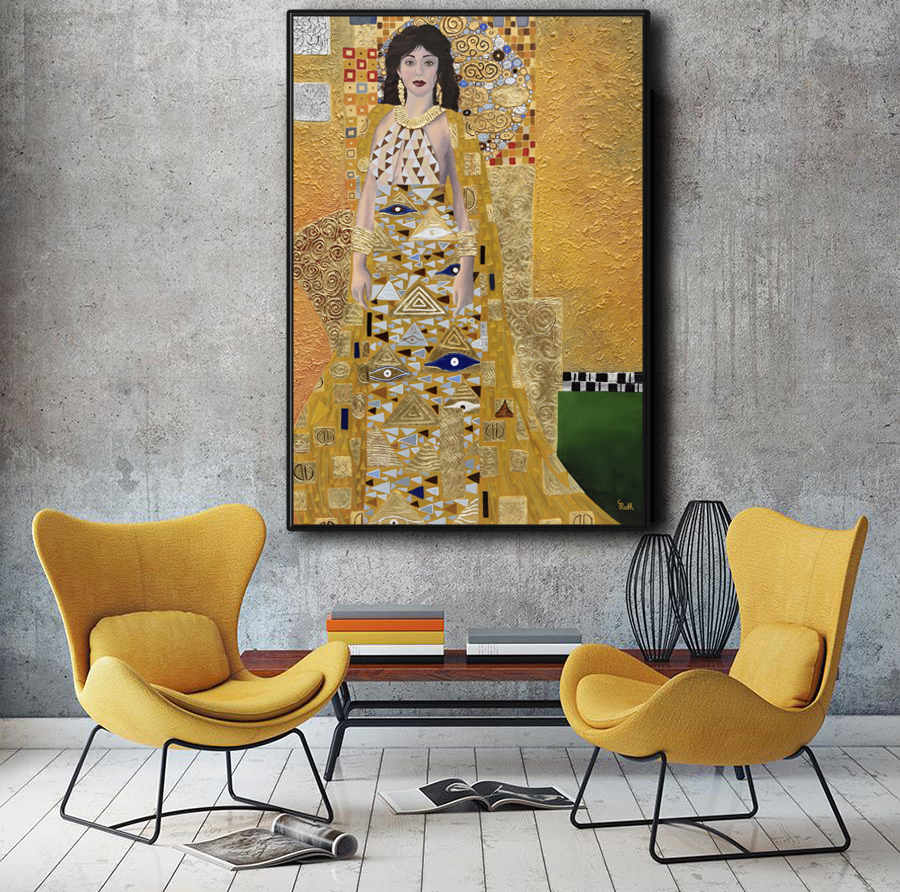
For painting this study, I used Gustav Klimt's portrait of Adele Bloch-Bauer I; the background and technique remained mostly the same, but I used a different female figure (in an Egyptian style). I was not primarily motivated to paint this by an admiration for Klimt's paintings (as he is not among my favorite painters), but rather by the technique I wanted to learn—I was very interested in gilding. Gilding is when real metal is applied in some form to a surface for decorative purposes (the hair-thin metal foils,
use of metal leaf foils along with their adhesives and gold pigments. The technique fascinated me greatly (my master, Kálmán Gasztonyi, introduced me to the secrets of this as well).
What is known about the technique of the original Portrait of Adele Bloch-Bauer I, in brief:
Portrait of Adele Bloch-Bauer (also known as Woman in Gold) is a painting by Gustav Klimt. The portrait is the final and most fully representative work of Klimt's golden phase. The painting consists of oil paint, silver and gold leaf applied to a canvas base. Adele's hair, face, décolletage, and hands were painted in oil.
Dr. Frank Whitford (art historian and critic, as well as a leading expert on 20th-century British, German, and Austrian art) identifies the influences of Byzantine, Egyptian, Mycenaean, and Greek art, describing how „the gold is like Byzantine mosaics;
On the dress, the eyes are Egyptian motifs, while the repeating scrolls and curls originate from Mycenaean culture.”


